Introduction
Do you know about eye treatment costs in India and why patients worldwide prefer it?
It's because India is a leading destination for advanced eye care, featuring internationally trained ophthalmologists, the latest technology, and accredited hospitals.
With treatments such as cataract surgery, retinal disorders, and glaucoma, India offers quality care that meets the global standard and makes India a leading destination for eye treatment worldwide.

Why is Eye Treatment Performed?
Eye treatment focuses on addressing various eye conditions, including cataracts, glaucoma, detached retinas, retinal tears, diabetic retinopathy, and farsightedness. Treatment is recommended for patients suffering from the following eye conditions:
- Cataracts
- Refractive errors
- Ptosis (drooping eyelids)
- Retinal detachment
- Glaucoma
Cost Breakdown
The cost of eye treatment is cost-effective as compared to Western countries, which includes the cost of surgery, diagnostic tests, rehabilitation (if necessary), follow-ups, and so on. Here’s an overview of the cost breakdown of eye treatment in India:
Cost Component | Details | Estimated Cost in USD |
Pre-operative Consultation & Diagnosis | Applanation Tonometry, Corneal Tomography, Fluorescein Angiogram, Dilated Pupillary Exam, Slit Lamp Exam | 80 USD |
Surgery Costs | Includes surgeon fees, type of surgery, and hospital stay | The starting price is 1200 to 4200 USD |
Factors that Affect the Overall Cost of Eye Treatment in India
- Type of Procedure: The specific eye treatment required significantly affects the cost. Basic procedures, such as eye exams or minor surgeries, are generally less expensive compared to advanced treatments like LASIK, cataract surgery, and retinal surgeries.
- Technology and Equipment: Hospitals that use advanced technology, such as LASIK or other specialized equipment, may charge more due to the precision and effectiveness these technologies provide.
- Ophthalmologist's Experience and Expertise: Highly experienced ophthalmologists, particularly those with international training, may charge higher fees. This expertise can increase the overall cost of eye treatment.
- Hospital or Clinic Accreditation: Many Indian eye hospitals and clinics are accredited by international organizations like JCI (Joint Commission International) and NABH (National Accreditation Board for Hospitals & Healthcare Providers). These facilities often charge more due to their advanced facilities and commitment to quality care.
Types of Eye Treatment
Here are some types of eye treatment or surgery explained below:
- Blepharoplasty: This technique helps repair droopy eyelids, where the surgeon makes a small incision to remove the skin, muscle, and fat.
- Cataract Surgery: In this surgery, doctors use tint tools to remove the cloudy lens and replace it with an artificial lens.
- Corneal Transplant: to treat patients with damaged parts of the cornea with healthy donor tissue, doctors use a special tool to keep the eye open, and the surgery can be easily done.
- Glaucoma Surgeries: For that, doctors use a tiny tube called a shunt into the white of your eye, which helps to drain extra fluid from your eye.
- LASIK (laser in-situ keratomileusis): In this surgery, doctors use a beam of light to change the shape of the cornea, which will help adults get clear vision.
- Retina Surgeries: This surgery is performed to repair a retinal tear, hole, or detachment.
- Eye Muscle Surgery: Strabismus is a condition where the eyes don’t move together as a pair. To treat that, surgery is not an option, but when it's needed, surgeons attempt to restore the eye muscles to a proper position.
Country-Wise Cost Comparison of Eye Treatment in India
Country | Cost Structure |
India | 1,200-4,200 USD |
United States | 3,000-7,000 USD |
Germany | 2,000-5,000 USD |
Turkey | 2,500-6000 USD |
◾ Key Takeaways
✅ Affordable Treatment Cost: The cost of eye treatment in India is cost-effective compared to Western countries, where a patient can get eye treatment at an affordable cost without compromising quality care.
✅ Advanced Medical Technology: India offers advanced technologies in eye treatment, such as Artificial Intelligence in Diagnostics, Robotic-Assisted Eye Surgeries, Optical Coherence Tomography (OCT), etc., improving the quality of care in vision care.
Quality of Care in Eye Treatment in India
India is known for its quality eye treatment, attracting patients from around the world who seek effective care at affordable costs. Here are the main reasons why eye care in India stands out:
- Skilled Ophthalmologists: India has many highly trained ophthalmologists, with both national and international experience. They handle complex cases, which contributes to high success rates in treatments.
- Modern Technology: Indian hospitals use up-to-date technology for eye care. This improves the accuracy of diagnoses and the effectiveness of treatments in procedures like LASIK, cataract surgery, and retinal treatments.
- Accredited Hospitals: Many hospitals in India hold accreditations from organizations like JCI (Joint Commission International) and NABH. These accreditations confirm that the hospitals follow strict standards for patient safety and quality care.
- Range of Treatments: Hospitals in India offer a wide variety of eye treatments, from routine check-ups to advanced surgeries. This range allows patients to receive treatments that suit their specific needs, whether it’s for cataracts, glaucoma, or other eye conditions.
- Patient Support Services: Many Indian hospitals offer extra support for patients, such as language assistance for international visitors, counseling before and after treatment, and help with accommodations. These services make the treatment experience smoother and more comfortable.
Best Doctors for Eye Treatment in India
Indian ophthalmologists are highly skilled and experienced in their field, and many of them are trained internationally and are highly dedicated to providing quality care for patients seeking treatment in India.
Best Hospitals for Eye Treatment in India
Indian hospitals are highly dedicated to providing quality care and facilities for patients seeking eye treatment in India, and many of them are accredited by international organizations such as JCI and NABH that ensure they meet international medical standards.
Technologies Used in India for Eye Treatment in India
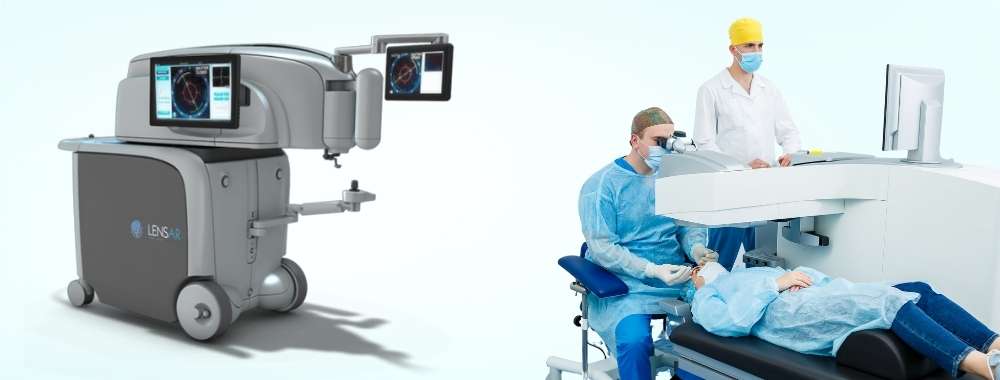
The field of eye care has seen incredible advancements in eye treatment in the past few decades. From surgical techniques to state-of-the-art diagnostic tools, these developments have significantly improved the quality of vision care and outcomes for patients.
Understanding these advancements can help patients make informed decisions about their eye health.
Latest Advancements include:
- Laser-Assisted Cataract Surgery: Cataract surgery is now one of the most successful surgical procedures worldwide. Laser-assisted techniques offer greater precision during the operation, leading to quicker recovery times and reduced dependence on glasses afterward.
- Implantable Contact Lenses (ICLs): Implantable contact lenses, also known as ICLs or phakic intraocular lenses, provide an effective solution for patients with significant refractive errors, offering clear vision correction directly within the eye.
- Presbyopic Lens Exchange (PRELEX): PRELEX is a surgical procedure used to treat presbyopia. It involves replacing the natural lens of the eye with a multifocal intraocular lens (IOL), restoring near and far vision.
- Artificial Intelligence in Diagnostics: AI is advancing rapidly in diagnosing and managing eye conditions. It analyzes retinal images to detect signs of diabetic retinopathy, glaucoma, and macular degeneration. These capabilities enable early diagnosis and timely intervention, helping to prevent complications.
- Robotic-Assisted Eye Surgeries: Robotics is increasingly being integrated into various medical fields, including ophthalmology. Robotic-assisted systems are used to perform complex eye surgeries, such as cataract extraction and corneal transplantation, with greater precision and control.
- Gene Therapies for Genetic Eye Disorders: Gene therapy is revolutionizing the treatment of genetic eye disorders, once considered untreatable. This innovative approach targets conditions like retinitis pigmentosa and Leber's congenital amaurosis, which cause progressive vision loss, offering new hope for patients.
- Optical Coherence Tomography (OCT): Optical coherence tomography (OCT) is a non-invasive imaging technique that provides high-resolution cross-sectional images of the internal structures of the eye. It is invaluable for diagnosing and monitoring various eye conditions.
Preoperative Preparation for Eye Treatment in India
Necessary Diagnostic Tests
The eye examination includes several tests, such as:
Tests | Description |
Applanation Tonometry | This test measures the amount of pressure needed to flatten a portion of your cornea. This pressure reading helps in diagnosing and monitoring glaucoma. |
Corneal Tomography | This computerized test maps the curve of your cornea, checking for issues with the surface of your eye, such as swelling, scarring, and other abnormalities. |
Fluorescein Angiogram | This test shows how blood moves through your retina, helping to diagnose conditions like diabetic retinopathy, retinal detachment, and macular degeneration. |
Dilated Pupillary Exam | This exam involves using special drops to expand the pupil, allowing a detailed examination of the retina for signs of disease. |
Slit Lamp Exam | Doctors use a microscope with a beam of light to examine the eye. This test can also involve pupil dilation and helps diagnose glaucoma, cataracts, macular degeneration, and corneal injuries. |
🟢Do’s Before Surgery
Follow Doctor’s Instructions: Adhere to the specific guidelines given by your eye doctor, which may include taking certain medications, wearing glasses instead of contact lenses, and fasting if required.
Remove Eye Makeup and Contact Lenses: Ensure your eyes are clean and free from makeup, lotions, or other products before your treatment begins.
🔴Don’ts Before Surgery
Don’t Consume Alcohol: You’ll be advised to avoid alcohol for at least 24 hours before your treatment, as it can affect your body’s response to the procedure.
Don’t Smoke: Smoking can interfere with the healing process, so you’ll be asked to avoid it before treatment, as it may increase the risk of complications.
Don’t Ignore Symptoms: If you’re experiencing symptoms such as redness, irritation, or dryness, inform your doctor before the treatment begins.
Surgical Procedure of Eye Treatment
Before Surgery
Before surgery, your doctor will provide specific guidelines on what you should do and avoid, which includes details about medications, such as when to stop taking them.
For many eye surgeries, you’ll need someone to drive you home, especially if you’re released on the same day.
During Surgery
You may receive local anesthesia to numb the area and keep your head in position, ensuring you don’t feel pain during the procedure.
In addition, the eye that doesn’t need surgery will be covered.
For some surgeries, like cataract removal or vision correction, topical anesthesia in the form of drops or gel is used to numb the eye.
Different procedures require different preparation, anesthesia, and equipment. For example, some surgeries use lasers or implants depending on the treatment.
After Surgery
If the surgery is an outpatient procedure, you’ll need an adult to drive you home.
The doctor will provide instructions on managing pain, medications, keeping the eye covered, and how to position your head for proper healing.
Post Operative Care and Recovery
Recovery Time and Hospital Stays
The recovery time after eye treatment is typically up to 2 weeks, but it can vary depending on the type of surgery. Each procedure has its own recovery time, so your healing process will depend on the specific treatment you've had.
Success Rate of Eye Treatment
The success rate of eye treatment also depends on the type of surgery, but overall, the success rate is very high, often around 95-99%, for many common eye surgeries like cataract removal and LASIK.
Possible Complications of Eye Treatment
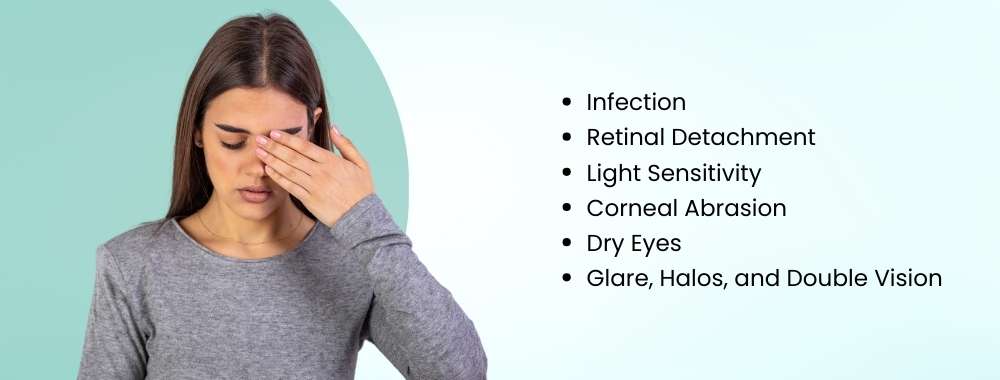
Eye treatments can have various complications, including:
Complications | Description |
Infection | During surgery, bacteria can enter the eye, causing symptoms like pain, redness, light sensitivity, and vision problems. Proper post-surgery care is essential to prevent infections. |
Retinal Detachment | This rare but serious complication of cataract surgery can lead to vision loss. Retinal detachment requires immediate medical attention to prevent permanent damage. |
Light Sensitivity | Sensitivity to light is a common side effect of many eye surgeries. Patients are advised to wear sunglasses outdoors and avoid bright lights indoors until the sensitivity decreases. |
Corneal Abrasion | A scratch on the eye’s surface can result in an infection or an ulcer, potentially leading to permanent damage. It’s important to follow post-operative care instructions to avoid this complication. |
Dry Eyes | Temporary dry eyes are a common side effect of LASIK surgery, which may last for the first six months after the procedure. Artificial tears and other treatments are often recommended to alleviate discomfort. |
Glare, Halos, and Double Vision | These side effects of LASIK surgery can make night vision difficult, with symptoms lasting from a few days to several weeks. These issues usually resolve as the eye heals. |
Why Choose RIHLATMED for Eye Treatment in India?
✅ Team of Top Ophthalmologists: We recommend that your doctors have more than 20 years of experience in eye treatment, such as cataract surgery, glaucoma, LASIK, retina surgery, etc.
✅ JCI/NABH Accredited Hospitals: We have also partnered with hospitals that have State-of-the-art Facilities that are equipped with the latest technologies, such as robotics, machine learning, and cutting-edge diagnostic and therapeutic equipment, designed to offer you comprehensive and personalized care.
✅ Other Benefits: We provide swift and detailed responses, accurate cost estimates, help with obtaining medical visas, accommodation in India, and priority appointment scheduling with the doctors. Moreover, we also facilitate your smooth arrival in India, with airport pickup, drop at the hotel, hospitalization assistance, and much more.
Conclusion
Nowadays, there are many people with eye diseases, and for that, they go through treatments and wear glasses for years, but there are diseases that need to be treated by surgery. But before proceeding with the surgery, patients undergo several eye examinations, and then the doctor will decide whether to do the operation or not.