

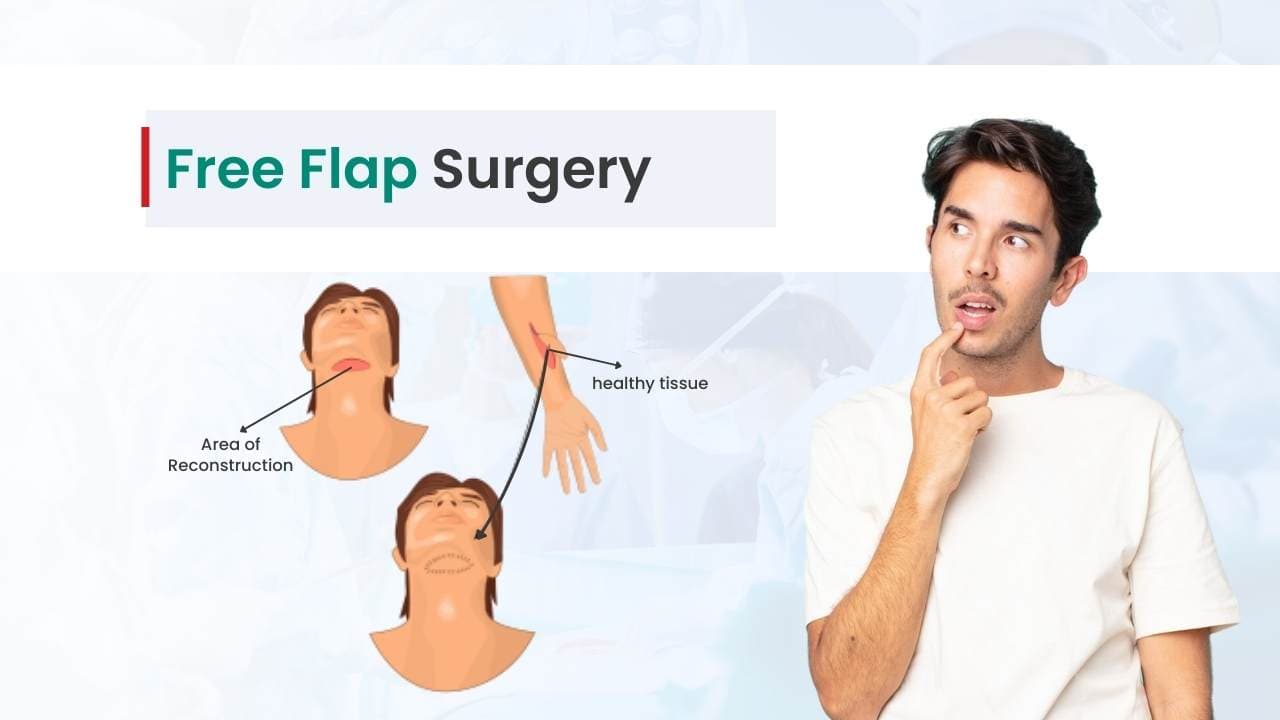
Free flap surgery, or microvascular tissue transfer, is a complex procedure that moves healthy tissue with its own blood supply from one body to repair defects.
If you want to know how free flap surgery helps patients regain confidence, this article will clear all your doubts.
What is Free Flap Surgery?
Free flap surgery is also known as the microvascular free flap process, which is a specialized head and neck surgical technique to reconstruct defects from trauma, head and neck cancer removal, or any other conditions.
Furthermore, these reconstructions offer long-term results and can help you regain function, appearance, and quality of life after head and neck cancer surgery.
What is Free Flap Surgery Used to Treat?
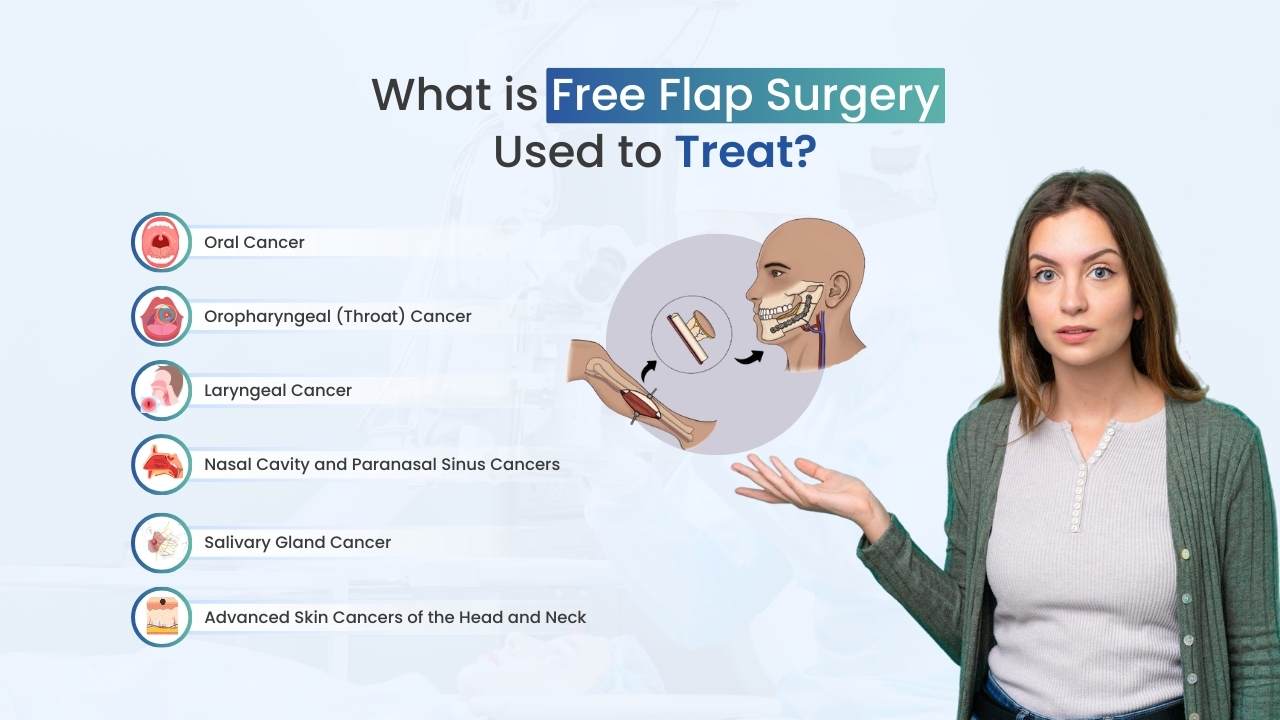
Healthcare providers commonly use free flap microvascular reconstruction after removal of head and neck cancers, which include:
- Oral Cancer
Cancer can affect the lips, the front of your tongue, the gums, the lining inside the cheeks, a small area of your gums, and more.
- Oropharyngeal (Throat) Cancer
Cancer of your soft palate, uvula, back of the tongue, and tonsils as well.
- Laryngeal Cancer
These are the cancers that involve the voice box or local cords and their nearby anatomy.
- Nasal Cavity and Paranasal Sinus Cancers
Those cancers that affect the inside of the nose and the sinuses.
- Salivary Gland Cancer
These cancers occur in the parotid, sublingual, and submandibular glands, which produce saliva in your mouth.
- Advanced Skin Cancers of the Head and Neck
Skin cancers are those that often grow in large areas of the head and neck.
What are the Types of Free Flap Surgery?
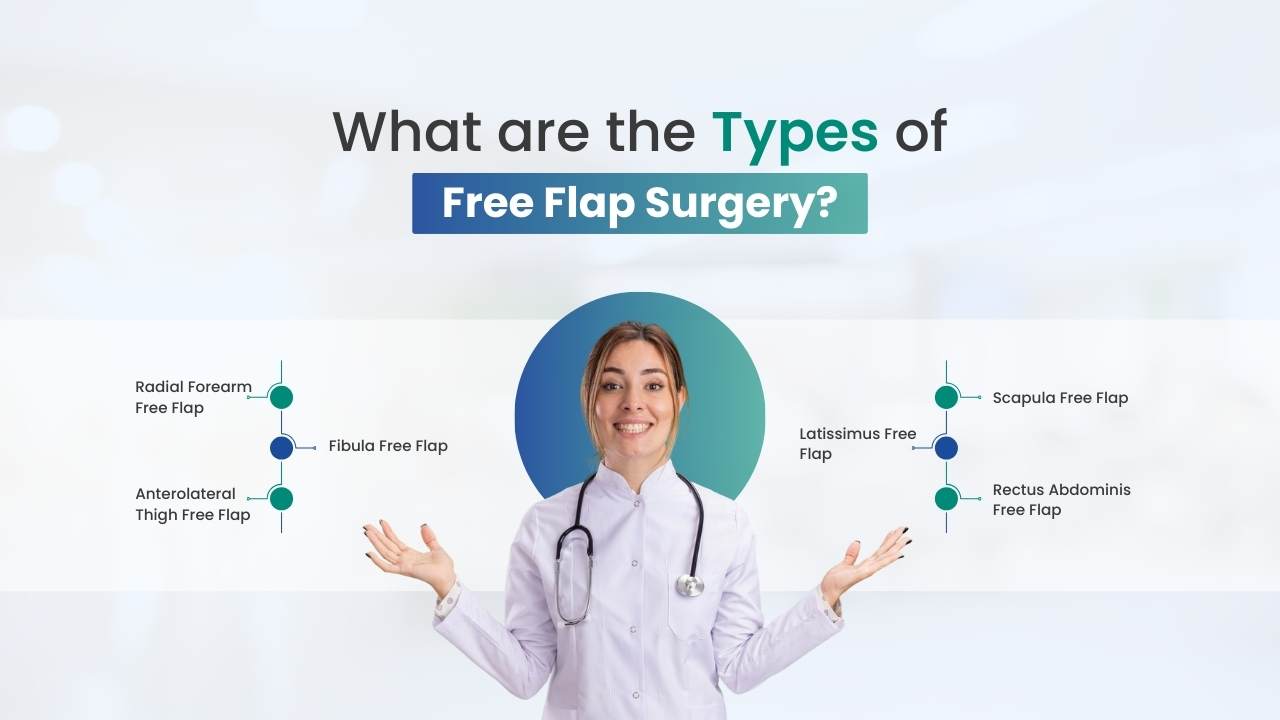
Head and neck surgeons often rely on several locations on the body to get tissue for free flap surgery. However, the type of tissue needed and where the reconstruction is necessary determine. Here is the list of some types of free flap surgery:
Radial Forearm Free Flap
- This is one of the most common types in which a surgeon uses skin and soft tissue from the forearm to rebuild areas inside the mouth or throat.
- Additionally, this flexible, thin flap makes an ideal choice because it restores speech and swallowing function after surgery for smaller cancers.
Fibula Free Flap
- This is another type of free flap, in which the surgeon takes a portion of the lower leg bone along with some skin and soft tissue.
- Additionally, doctors rely on the fibula free flap approach when reconstructing the jawbone after part of it has been removed.
Anterolateral Thigh Free Flap
- In this approach, the free flap takes skin, fat, and sometimes muscle from the outer thigh.
- Additionally, it is useful when more significant amounts of soft tissue are needed for places like the mouth, throat, or face.
Scapula Free Flap
- In this approach, the surgeon uses a portion of the shoulder blade to reconstruct the jaw, palate, or cheekbone.
- However, this process can be combined with nearby muscles such as the latissimus or serratus to help in reconstructing more significant defects.
Latissimus Free Flap
- This type of flap uses a large back muscle and can also include skin, which is similar to the ALT flap, that can provide a large amount of soft tissue if needed.
Rectus Abdominis Free Flap
- In this approach, the surgeon uses tissue from the abdominal wall, powered by the Deep Inferior Epigastric Artery and Vein (DIEA/V), which helps in reconstructing large defects in areas like the head, neck, breast, or extremities.
What to Expect During Flap Surgery
- This surgery is typically done by a plastic surgeon. However, the flap surgeon may work with them to provide the best treatment outcome.
- This is required especially when patients have cancer trauma or other complex surgical needs.
- The surgeon will get imaging to look at your blood vessels before the surgery, which helps them to plan the surgery and flap surgery to go faster.
- When the surgery begins, the surgeon prepares the recipient's surgical site so it is ready for the flap.
- However, in the case of a free tissue transfer, the surgeon will also disconnect the blood vessels and nerves then the surgeon uses a surgical microscope or special magnification glasses to reconnect them.
- After positioning the flap in the new location, the surgeon will close both incisions with sutures (stitches).
Recovery from Flap Surgery
- After surgery, you might experience swelling, which is normal, and you might wear compression garments or elastic bandages to control swelling.
- Some patients spend days in the hospital, and during that period of time, healthcare providers monitor their condition closely to make sure the blood flow is normal in the flap tissue.
What are the Risks of Free Flap Surgery?
Well, like any other surgery, free flap surgery also comes with risks, and some of them include:
- Bleeding
- Infection
- Asymmetry
- Wound-healing complications
- Pain
- Numbness or changes in sensation
- Swelling
- Death of flap tissue or flap loss
Conclusion
Free flap surgery provides a highly effective reconstruction process for complex head and neck defects, which helps in restoring vital functions such as speech, swallowing, and facial structure. However, this procedure involves risks, but its ability to provide durable, natural results makes it the best treatment option for you if you’re recovering from cancer surgery, trauma, or extensive tissue loss.
FAQs
How long will my hospital stay be after free flap surgery?
After surgery, you might need to stay in the hospital for 5 to 10 days on average, but it depends on your condition.
Can I drive after my free flap surgery?
You should not drive for at least four to six weeks after surgery, but to clear your doubts, you should discuss it with your doctor.
When can I go to the gym after free flap surgery?
You can usually start by doing light walking within days, brisk walking around 3 to 4 weeks, but for a proper gym workout, you should wait at least 3 months.
Can I shower after free flap surgery?
Yes, you can usually shower after free flap surgery, but you should ask your healthcare provider.
Who is eligible for free flap surgery?
The eligibility depends on the patient's need, ike reconstruction of large tissue defects from trauma, cancer, or chronic wounds, which require healthy, vascularized tissue when local options fail.
Will I have scars after free flap surgery?
Yes, you will have scars after free flap surgery, but surgeons use techniques to minimize them and leave marks at both the flaps' donor site and the recipient site.